Painel de LED RGB para Caixa de Luz de Pedra | Pedra Retroiluminada 24V
As placas de LED RGB retroiluminam pedras, ônix e faces de caixas de luz com mudança de cor em vez de branco fixo. O painel de 24V e 480x240mm permite cortes a cada 20mm e mantém a iluminação uniforme em caixas de luz de pouca profundidade.
Manta de LED RGB models & key specifications (2)
17947 — 5050 · 162 LEDs/m · 24V
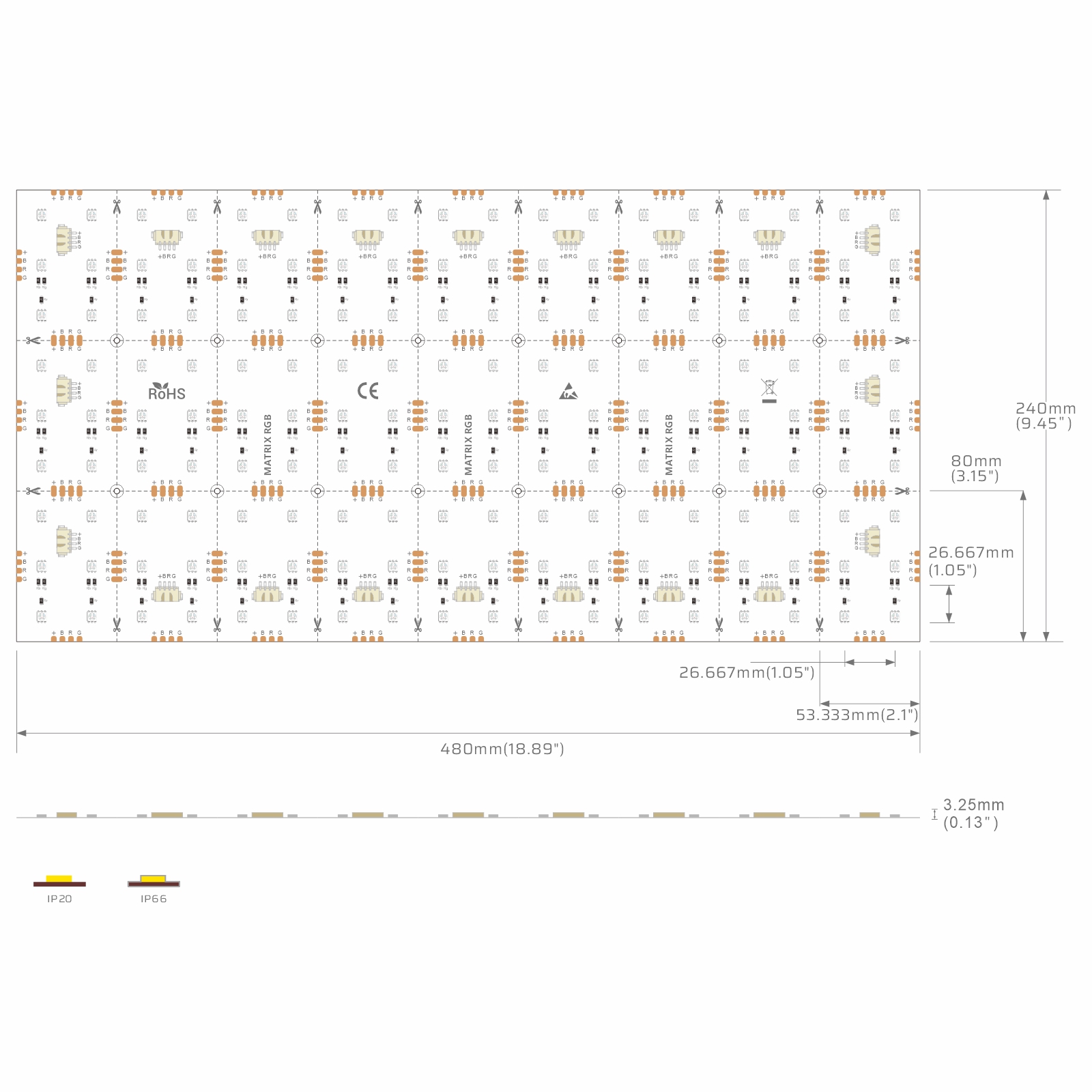
LED Type: 5050 · LED Density: 162LEDs/pcs · Voltage: DC24V · Cutting Unit: 6LEDs/53.333mm · PCB Width: 480*240mm · Copper Foil: 2oz · Circuit Type: CV · IP Rating: IP20/IP65
6352 — 5050 · 288 LEDs/m · 24V
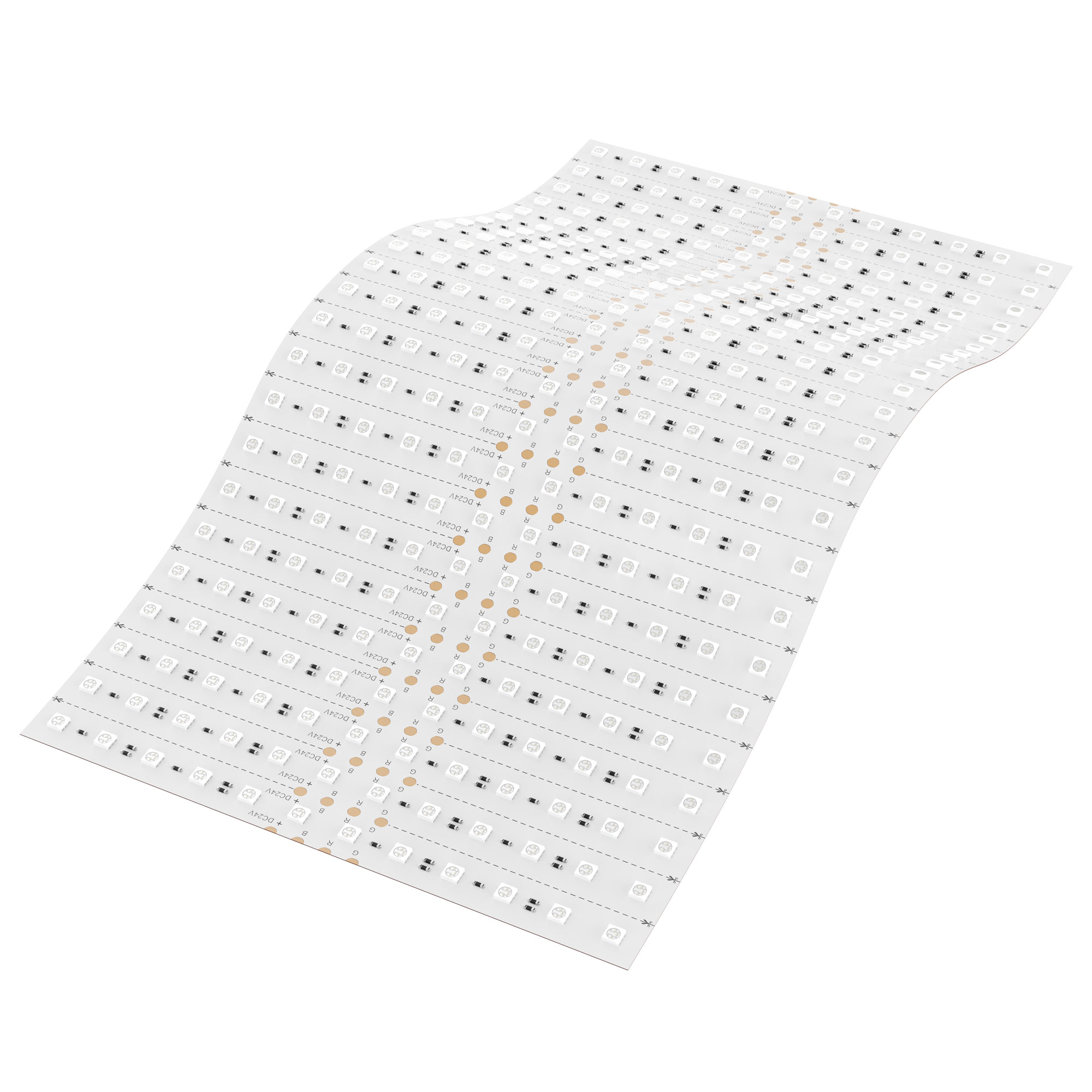
LED Type: 5050 · LED Density: 288 LEDs/pcs · Voltage: DC 24V · Power: 17.2~70W · Cutting Unit: 12LEDs/20*240mm · PCB Width: 240x480mm · Copper Foil: 2oz · Circuit Type: CV · IP Rating: IP20
Other Manta flexível de LED series
RGB LED Sheet — Buyer Questions
What is an RGB LED sheet used for?
Stage and event backdrops, exhibition walls, colour-changing signage and architectural feature panels — anywhere a whole surface has to change colour rather than a line of tape. Sheets tile edge to edge, so a 480×240 mm module scales to any rectangle.
- Related series RGBW LED sheet with a white channel
- Product 17947 RGB LED sheet
Should I choose the 288-LED or 162-LED RGB sheet?
The 288-LED #6352 sits on a 20 mm pitch and blends within a 15–25 mm diffuser gap — the right pick for shallow cabinets and close viewing. The 162-LED #17947 costs less and draws less current on a 53.3 mm pitch; specify it when you have 30 mm or more of depth behind the diffuser.
- Related series full LED sheet range
- Product 6352 RGB LED sheet density
Which controller drives an RGB LED sheet?
Any 24 V constant-voltage RGB controller: PWM, RF, Wi-Fi, DMX512 decoders and SPI gateways for show control. Match the controller's per-channel current to the connected load — up to 70 W per #6352 sheet.
Will an RGB LED sheet show visible dots through the diffuser?
Not when the diffuser distance matches the LED pitch. At 20 mm pitch, 15–25 mm behind opal acrylic gives a continuous colour wash. Cut that gap in half and the individual dies start to read as dots, which is the single most common cause of a patchy colour wall.
- Related series dot-free LED sheet backlighting